


Chicken Killing Chain
A stainless steel connecting ring, also known as a link connector or chain connector, is a hardware component used to join two ends of a stainless steel chain together. These rings are typically manufactured from the same grade of stainless steel as the chain itself to ensure compatibility and resistance to environmental factors such as corrosion and rust.
TAIAN AOTAI CHAIN COMPANY : Your Trustworthy Stainless Steel Connecting Ring Manufacturer!
Our company was established in 2003 and is a production base specializing in manufacturing ring chains. Our products are widely used in automobiles, trains, ports, steel mills, petroleum, food machinery, tourism, parks, lifting, hoisting and other industries. And we can customize the processing according to users.
Products Widely Used
The products produced by our company can be widely used in automobiles, trains, docks, steel plants, petroleum machinery, food machinery, tourism, parks, lifting, hoisting, bundling and other industries.
Advanced Production Equipment
Our company has advanced equipment, such as fully automatic CNC steel bar straightening and cutting machines, chain flash butt welding machines, chain medium frequency quenching machines, hydraulic chain stretching machines, etc.
Rich Products
Our company can produce endless chains, lifting chains, stainless steel chains, ordinary chains, high-strength chains, livestock and poultry slaughtering chains, mining chains, cement elevator chains, traffic jam chains, guardrail chains, spare parts, etc.
Customizable
The products we produce can be OEM customized, and we provide technical support for chain installation, use and maintenance, answer customers' questions during chain use, and we provide product warranty services for a certain period of time.

High Strength Stainless Steel Slaughter Chain
High-strength stainless steel slaughter chains are specialized components used in the meat processing industry for the handling, transportation, and processing of carcasses during the slaughtering process. These chains are designed to be highly durable and resistant to corrosion, ensuring longevity and reliability even in the harsh conditions of a slaughterhouse. The material composition of high-strength stainless steel typically includes chromium, nickel, and molybdenum, which provide excellent corrosion resistance and strength. The alloy also offers improved hygiene compared to traditional materials, as it is less likely to harbor bacteria and is easier to clean and sanitize. This is crucial in the food processing industry to prevent contamination and ensure food safety.

A slaughter conveyor chain is an integral component of the automated systems used in modern slaughterhouses and meat processing plants. It serves the critical function of transporting animal carcasses from one stage of the processing line to the next with efficiency and minimal manual intervention. Engineered to handle the weight and movement of carcasses, these conveyors are typically made from robust materials such as high-strength stainless steel or other corrosion-resistant metals. The choice of material ensures durability, easy cleaning, and compliance with strict hygiene standards required in the food industry.

In the context of agriculture, particularly within the realm of livestock processing, a "slaughter chain" refers to the sequence of operations and equipment involved in the slaughtering process of animals, such as cattle, pigs, sheep, goats, and poultry. The term encompasses the entire process from the moment animals arrive at the facility until the final products are ready for packaging or further processing.

A slaughter line chain, commonly referred to as a conveyor chain or a kill chain, is a system used in meatpacking facilities to efficiently move carcasses through various stages of the slaughter process. This automated or semi-automated process involves multiple phases, including stunning, exsanguination (bleeding), scalding, dehairing (for hogs), evisceration, splitting, chilling, and cutting into smaller pieces. The chain itself is a series of interlinked metal components designed to support and transport the carcasses while minimizing contact with human workers. The use of a conveyor chain allows for a controlled and continuous flow of product, enhancing throughput and ensuring that each step in the process can be performed in a timely and consistent manner.

The poultry slaughter chain is a mechanized process specifically designed for the efficient and humane killing, processing, and preparation of chickens, turkeys, ducks, or other birds raised for consumption. This process is carefully regulated to comply with both animal welfare standards and food safety regulations.

An assembly line chain is a fundamental component of an assembly line system, a manufacturing process where individual parts are sequentially assembled into a finished product. This type of production line is characterized by its continuous flow and division of labor, allowing each worker or station to focus on a specific task. The chain itself is a loop of interconnected metal links, often driven by motors and gears, that moves at a constant speed. It provides the platform upon which products or components are transported from one workstation to the next. The design of the chain can vary depending on the requirements of the assembly process; some chains are simple and flat, while others have hooks or other mechanisms for hanging items.

Plastic Nylon Slaughter Line Trolley Chain
A plastic nylon slaughter line trolley chain is a type of conveyance system used in the meat processing industry, specifically designed for the transportation of carcasses or animal parts during the slaughtering and butchering processes.

A chicken hook chain is a specialized type of conveyor system used in the poultry processing industry for the transportation of chickens through various stages of slaughter and processing. This chain consists of a series of hooks that are attached to the carcasses of chickens. The hooks are then connected to a moving chain that carries the chickens from one processing station to another. The design of the chicken hook chain allows for efficient handling of the birds during the evisceration, chilling, and other processing stages. The hooks are typically made from stainless steel to prevent rust and ensure hygiene, which is crucial in the food processing environment.
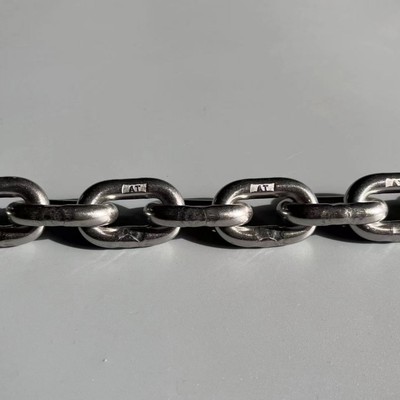
High-strength stainless steel chains are specially designed to offer both the robustness and corrosion resistance characteristic of stainless steel, along with enhanced mechanical properties suitable for lifting and rigging applications. These chains are manufactured from stainless steel alloys that contain chromium, nickel, and sometimes molybdenum, which provide excellent resistance to rust and oxidation, making them ideal for environments where exposure to moisture, chemicals, or salt air is likely.
What is Stainless Steel Connecting Ring
A stainless steel connecting ring, also known as a link connector or chain connector, is a hardware component used to join two ends of a stainless steel chain together. These rings are typically manufactured from the same grade of stainless steel as the chain itself to ensure compatibility and resistance to environmental factors such as corrosion and rust.
Features of Stainless Steel Connecting Ring
Corrosion Resistance
Made of stainless steel, these rings are highly corrosion-resistant and suitable for environments exposed to moisture, chemicals or salt, such as marine environments.
Strength and Durability
Stainless steel itself is very strong and can withstand high tensile forces. The connecting rings are designed to match the strength of the chain being used, ensuring the connection point is as strong as the rest of the assembly.
Versatility
Stainless steel connecting rings can be used with a variety of stainless steel chains, including different sizes and grades, allowing for design and application flexibility.
Easy To Install and Remove
Many stainless steel connecting rings are designed with quick-connect features that allow for easy installation and removal without the need for special tools. This makes maintenance and repair tasks simpler and more efficient.
Class 304 (AISI 304)
This is the most widely used austenitic stainless steel grade and offers good corrosion resistance to a wide range of atmospheric conditions and mild chemical exposure. It contains 18% chromium and 8% nickel, which gives it an austenitic structure and corrosion-resistant properties.
Level 316 (AISI 316)
Like Grade 304, Grade 316 also contains additional molybdenum (2-3%), which enhances its corrosion resistance, particularly against chlorides and other industrial solvents. This makes it suitable for harsher environments and marine applications.
316L Grade (AISI 316L)
This is a lower carbon version of grade 316 and is used to prevent sensitization (a condition in which chromium carbide precipitates along grain boundaries, reducing corrosion resistance) during welding operations. Grade 316L is preferred for fabricated components that require welding.
Duplex Stainless Steel
Duplex stainless steels have a mixed microstructure of austenitic and ferrite, resulting in higher strength and corrosion resistance than standard austenitic steel grades. Grades such as 2205 (UNS S32205) are often used in critical applications requiring high strength and excellent corrosion resistance.
How to Choose Stainless Steel Connecting Ring

Material Grade
Stainless steel comes in different grades, each with its own properties and characteristics. Common stainless steel grades used for connecting rings include 304 and 316. Grade 316 stainless steel has higher corrosion resistance, making it suitable for applications in marine or corrosive environments. When selecting a material grade, consider the intended use and required level of corrosion resistance.
Dimensions and Load Capacity
Determine the appropriate size and load capacity of the coupling ring based on your specific application. Consider the weight and force the ring will need to bear. Make sure the load capacity of the ring exceeds its maximum load to ensure safety and reliability.
Shape and Design
Connector rings come in a variety of shapes, such as round, D-shaped or triangular. The shape should match your intended use and the type of connection you will be making. Consider factors such as ease of connection, compatibility with other components, and the specific requirements of your application.
Surface Finish
The surface finish of a connecting ring affects its appearance and corrosion resistance. Options may include polished, brushed or coated finishes. Choose a finish that suits your aesthetic preferences and provides adequate corrosion protection in the intended environment.
Certifications and Standards
Look for coupling rings that meet industry standards and certifications. For example, stainless steel rings manufactured to ASTM (American Society for Testing and Materials) standards or ISO (International Organization for Standardization) certification are generally reliable and meet quality requirements.
Application Notes
Consider any specific requirements or challenges of the application. For example, if the connecting ring will be exposed to high temperatures, choose a stainless steel grade with appropriate heat resistance. If the ring will be used in a high-vibration environment, consider a design that minimizes the risk of loosening or disconnection.

Evaluate the Application
Determine the specific use for which you need the connection ring. Understand the load requirements, the types of connections you will make, and any specific environmental factors that may affect its performance.
Choose the Right Size and Type
Choose a coupling ring that is suitable for your application in terms of size, load capacity and shape. Make sure the ring is strong enough to withstand the expected load and is compatible with the other components it will be connected to.
Check the Connecting Ring
Before use, carefully inspect the stainless steel connecting ring for any defects or damage. Look for signs of cracks, deformation, or corrosion. If you notice any problems, replace the ring with a new one to ensure safety and reliability.
Direct Connection
In some cases, you can connect a connection ring directly to a designated connection point. Make sure the attachment is secure and the rings are properly aligned.
Carabiner Or Snap Hook
If the connecting ring has a gate or snap hook design, you can use it to connect two components quickly and safely. Open the door, connect it to the desired point, then close the door to ensure connection.
Pin Or Bolt
Some connecting rings may have pins or bolts that can be tightened to secure the connection. Insert the dowel or bolt into the appropriate hole and use a wrench or tool to tighten until secure.
Test Connection
After attaching the stainless steel connecting rings, test the connection to ensure its strength and stability. Apply moderate force or load to check that the ring is securely fastened. If there are any signs of weakness or instability, re-evaluate the connection and make any necessary adjustments.
Regular Inspection and Maintenance
Regularly inspect stainless steel coupling rings for signs of wear, corrosion, or any other damage. Clean the ring regularly to remove dirt, debris, or anything else that may affect its performance. Lubricate moving parts (if applicable) to ensure smooth operation.
How to Maintain Stainless Steel Connecting Ring


Regular Cleaning
Clean your stainless steel coupling rings regularly to remove dirt, debris, and any material that may have accumulated on its surface. Use a mild detergent or soapy solution and a soft brush or cloth to gently scrub the ring. Rinse thoroughly with clean water and dry completely to prevent water spots or corrosion.
Remove Corrosion
If you notice any signs of corrosion on the connecting ring, take immediate steps to remove it. Use stainless steel cleaner or a mixture of vinegar and water to gently scrub away the corrosion. Then rinse and dry the ring thoroughly.
Lubricate Moving Parts
If the coupling ring has moving parts, such as hinges or screw pins, apply a small amount of lubricant to ensure smooth operation. Use a lubricant designed for stainless steel or a silicone-based lubricant. Avoid using excess lubricant as it can attract dirt and debris.
Check For Damage
Regularly inspect the connecting rings for any signs of damage, such as cracks, deformation or wear. Pay attention to the areas of the ring that experience the greatest pressure or load. If any problems are found, replace the connecting ring with a new one to ensure safety and reliability.
Store Correctly
When not in use, store stainless steel coupling rings in a clean, dry, and well-ventilated area. Avoid storing it in a humid environment as moisture can cause corrosion. Consider using a storage container or bag to protect your ring from dust and other contaminants.
Periodic Inspection
Periodically inspect connecting rings for signs of wear, corrosion, or other damage. This helps identify potential problems before they become more serious. If any problems are found, resolve them promptly to maintain the integrity and safety of the connection ring.
Certificate


Frequently Asked Questions
Hot Tags: chicken killing chain, China chicken killing chain manufacturers, factory, Hoisting Machinery, Duck Killing Chain, Cutting Line Chain, Brake Chain, Mining Chain, Slaughter Conveyor Chain



Send Inquiry
