


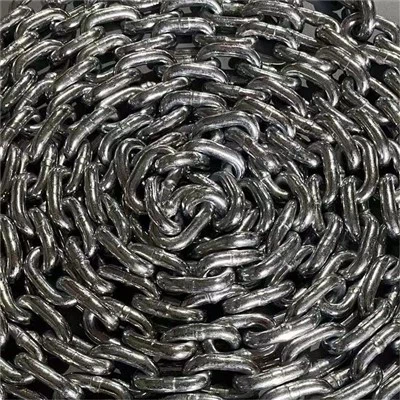
High Strength Alloy Steel Slaughter Chain
An alloy chain is a type of chain made from metal alloys rather than pure metals. Alloys are mixtures of two or more metallic elements that are combined to produce a material with properties superior to those of the individual components. The use of alloys in chain manufacturing enhances the strength, durability, corrosion resistance, and other characteristics necessary for various industrial applications.
TAIAN AOTAI CHAIN COMPANY : Your Trustworthy Alloy Chain Manufacturer!
Our company was established in 2003 and is a production base specializing in manufacturing ring chains. Our products are widely used in automobiles, trains, ports, steel mills, petroleum, food machinery, tourism, parks, lifting, hoisting and other industries. And we can customize the processing according to users.
Products Widely Used
The products produced by our company can be widely used in automobiles, trains, docks, steel plants, petroleum machinery, food machinery, tourism, parks, lifting, hoisting, bundling and other industries.
Advanced Production Equipment
Our company has advanced equipment, such as fully automatic CNC steel bar straightening and cutting machines, chain flash butt welding machines, chain medium frequency quenching machines, hydraulic chain stretching machines, etc.
Rich Products
Our company can produce endless chains, lifting chains, stainless steel chains, ordinary chains, high-strength chains, livestock and poultry slaughtering chains, mining chains, cement elevator chains, traffic jam chains, guardrail chains, spare parts, etc.
Customizable
The products we produce can be OEM customized, and we provide technical support for chain installation, use and maintenance, answer customers' questions during chain use, and we provide product warranty services for a certain period of time.

High Strength Alloy Steel Chain
High Strength Alloy Steel Chain is a type of chain engineered for applications requiring enhanced durability and performance under heavy loads. It is constructed from steel alloys that have been heat-treated and processed to achieve high tensile strengths, improved impact resistance, and better overall toughness. The alloying elements in the steel, such as manganese, silicon, chromium, and vanadium, contribute to the material's ability to endure repetitive stresses and extreme environments without failing prematurely. These chains are commonly used in industries such as mining, construction, forestry, and maritime, where they are subjected to demanding conditions, including exposure to abrasive materials, corrosive substances, and heavy lifting. The high strength of these chains allows them to carry heavier loads with less material, which can result in lighter and more efficient systems.

High Strength Alloy Steel Slaughter Chain
High Strength Alloy Steel Slaughter Chain refers to a type of chain specifically designed for use in the meat processing industry, particularly during the slaughtering and evisceration stages. These chains are manufactured from high-strength alloy steels that offer superior durability and resistance to wear, corrosion, and fatigue compared to regular carbon steel chains. The use of alloy elements such as chromium, molybdenum, vanadium, and others enhances the mechanical properties of the steel, allowing the chain to withstand the harsh conditions of a slaughterhouse environment.

Alloy steel chain is the chain used in the slaughter line for poultry hair removal, cutting and other work. High quality galvanized alloy steel makes the wear resistance and corrosion resistance of the product improved, the international standard: φ8×25.4×26. Our company uses special alloy steel materials to ensure the improvement of product performance, precision processing and heat treatment to ensure the dimensional accuracy of the chain. Advanced automatic welding equipment and professional technicians make the product quality more secure.
First new product launch in 2023
A Duck Killing Chain is a specialized tool used in the poultry industry, particularly during the slaughtering process of ducks. This chain is part of an automated or manual killing system where ducks are hung by their legs and then passed through a series of stations where they are stunned, killed, bled, and prepared for further processing. The chain itself may consist of hooks or grips that secure the ducks by the feet as they move along the production line. The design of a Duck Killing Chain takes into account the need for efficiency, humane handling, and the ability to handle the weight and size of the ducks being processed. The chain moves continuously, and the ducks are quickly and methodically moved from one stage of the process to the next. It is crucial for the chain to be strong enough to support the birds without breaking and to be adjustable to accommodate different sizes and weights of ducks.

A Rabbit Killing Chain is a device used in the agricultural sector, specifically in the rabbit meat processing industry, to humanely dispatch rabbits during the slaughtering process. The purpose of this chain is to provide a quick and consistent method for killing rabbits to ensure they are rendered unconscious or dead before further processing. The design of a rabbit killing chain typically involves a conveyor belt or series of hooks that hold the rabbits by their hind legs as they pass through a killing station. The method of killing can vary; it might involve electrical stunning, mechanical methods like a captive bolt pistol, or manual methods such as decapitation or neck breaking. The choice of method will depend on the preferences of the processor, local regulations, and the scale of operation.

Goose chain is also a kind of poultry slaughter chain, is a new slaughter chain independently developed by our company, the specification is φ8×25.4×26, the use of special high-quality alloy steel, material hardness, surface galvanized, wear resistance, for poultry hair removal and cutting, because of its high hardness, can work on the assembly line for a long time, strong pressure resistance, high efficiency.
What is Alloy Chain
An alloy chain is a type of chain made from metal alloys rather than pure metals. Alloys are mixtures of two or more metallic elements that are combined to produce a material with properties superior to those of the individual components. The use of alloys in chain manufacturing enhances the strength, durability, corrosion resistance, and other characteristics necessary for various industrial applications.
Features of Alloy Chain
Corrosion Resistance - Many alloys used in chain manufacturing, such as stainless steel, offer excellent corrosion resistance against moisture, acids, alkalis, and other corrosive substances. This feature is critical in an environment where standard steel chains deteriorate quickly.
Fatigue Resistance
Fatigue resistance is the ability of a material to withstand repeated stress without failure. Alloy chains are generally designed to withstand cyclic loading without significant degradation over time.
Ductility
Ductility is the ability of a material to deform under tensile stress. Some alloy chains are formulated to remain ductile, allowing them to absorb energy and resist crack propagation.
Low Temperature Performance
In cold environments, certain alloys retain their flexibility and do not become brittle, which is critical to maintaining the integrity of the chain in freezing conditions.
Weight To Strength Ratio
Alloy chains can be designed to have a good weight-to-strength ratio, which is beneficial in applications where weight reduction is important, such as aerospace or mobile equipment.
Stainless Steel Chain
These chains are made from a stainless steel alloy containing chromium for excellent corrosion resistance. They are typically used in environments exposed to chemicals, seawater, or high humidity. Examples include Type 304 and Type 316 stainless steel chains.
Heavy Duty High Test Chain
Heavy-duty high-test chain is constructed from high-strength alloy steel and is designed to handle heavy loads and harsh service conditions. They usually have larger diameters and heavier sections than standard chains.
Malleable Cast Iron Chain
Malleable cast iron chains are made from malleable cast iron, which is ductile iron that has been heat treated to reduce hardness and increase toughness. They are known for their impact resistance and are used in applications requiring impact loads.
Carbon Steel Alloy Chain
Carbon steel alloy chains are made of carbon steel alloyed with other elements such as chromium, molybdenum, vanadium and manganese for increased strength and durability. They are commonly used in the mining, construction and material handling industries.
Nickel Alloy Chain
Nickel alloy chains are made from a nickel-based alloy that is highly resistant to corrosion and can operate in extreme temperatures. They are used in chemical processing, aerospace and marine applications.
Galvanized Chain
While galvanized chain itself is not an alloy, it is carbon steel chain that is coated with zinc to prevent rust and corrosion. They are typically used outdoors or in environments where moisture protection is required.
Alloy Steel Chain
Alloy steel chain is made of heat-treated alloy steel, which has high strength and wear resistance. They are used in applications requiring light to medium loads but high durability.
Heat Treatment Chain
Heat treatment is a process applied to a chain to improve its mechanical properties, such as increasing hardness and strength. This can be done using carbon steel or alloy steel chains.
Special Alloy Chain
Specialty alloy chains are made from less common alloys such as titanium, aluminum, copper or bronze and are customized for specific applications that require unique properties such as low weight or electrical conductivity.
Materials of Alloy Chain

Stainless Steel
Stainless steel chains are usually made from alloys such as 304, 316 or 316L, which are highly resistant to corrosion and oxidation. They are suitable for use in marine, food processing and chemical handling environments.
Carbon Steel Alloy
These chains are made from carbon steel that can be alloyed with elements such as manganese, silicon, chromium, vanadium and molybdenum to increase strength and toughness. Common steel alloys include AISI grades such as 80, 100 and 70.
High Strength Low Alloy Steel
These steels are engineered to have greater strength and formability, as well as greater corrosion resistance than traditional carbon steels. They are typically used in heavy-duty applications.
Nickel Alloy
Choose chains made from nickel-based alloys such as Inconel and Hastelloy for their excellent resistance to corrosion, especially in harsh chemical environments and high temperatures.
Malleable Cast Iron
Malleable cast iron chains are made from ductile iron and are heat treated to enhance their toughness and impact resistance. These chains are used in applications where there is a risk of shock loads.
Aluminum Alloy
Aluminum chains are lightweight and have good corrosion resistance, making them suitable for applications where weight reduction is important, such as the aerospace industry.
Titanium Alloy
Titanium chains have high strength, light weight and excellent corrosion resistance. They are frequently used in aerospace and medical applications.
Galvanized Steel
While galvanizing itself is not an alloy, galvanizing is a process that adds a layer of zinc to carbon steel chains to prevent rust and corrosion. It provides an economical solution for environments with moderate corrosion risk.

How to Choose Alloy Chain
Purpose Of Use
When purchasing a Alloy Chain, understanding its intended use is pivotal. For jewelry, the chain needs to complement the pendant both aesthetically and in terms of weight-bearing. A dainty chain might not suit a heavy pendant, while a bulky chain might overpower a delicate one. For industrial purposes, factors such as the chain's load-bearing capacity, environment, and frequency of use take center stage. Maritime applications, for instance, demand chains that can withstand prolonged exposure to saltwater, emphasizing the importance of a chain's corrosion resistance.
Chain Design and Styles
The design of a Alloy Chain is more than just its aesthetic appeal-it speaks to its functionality. Different link styles, like box, cable, curb, or rope, offer varied strengths and appearances, catering to diverse tastes and uses. Considering chain thickness and length is equally crucial. While thicker chains generally promise higher durability, their weight and appearance might not be suitable for every purpose. Likewise, the chain's length can influence both its functionality and style quotient.
Tensile Strength
Tensile strength-the maximum amount of tensile stress a material can withstand without breaking-is vital when evaluating a chain's suitability. For applications requiring the chain to bear significant weight or force, understanding its tensile strength becomes non-negotiable. Consider, for instance, the chains used in lifting heavy machinery. An oversight in accounting for tensile strength could lead to catastrophic failures, emphasizing the importance of meticulous selection.
Benefits of Using Alloy Chain
Low Maintenance
Alloy Chain require minimal maintenance to retain their quality and appearance. They are resistant to staining, tarnishing, and fading, reducing the need for constant upkeep and polishing.
Versatility
Alloy Chain come in a wide range of grades, sizes, and configurations to suit diverse needs.
Cost-Effectiveness
While Alloy might have a higher initial cost compared to some other materials, its long lifespan, durability, and low maintenance requirements often result in cost savings over time. The reduced need for replacements and repairs can lead to overall financial benefits.
Hygiene and Cleanliness
Alloy is highly hygienic and easy to clean, making it suitable for applications in food processing, medical, and sterile environments. Its smooth surface discourages the growth of bacteria and contaminants, contributing to a safer and cleaner environment.
How to Maintain Alloy Chain


Periodic Inspection
Check the chain regularly for signs of wear, corrosion, stretch or damage. Pay attention to the pins, bushings and connecting rods. Replace any damaged or worn parts immediately.
Clean
Keep your chain clean by removing dirt, grime and debris that can accelerate wear. Use appropriate cleaners and brushes, and avoid harsh chemicals that may damage the chain's surface or materials.
Lubricating
Use a high-quality, all-weather lubricant designed specifically for alloy chains. Make sure the lubricant penetrates between the links and around the pins and bushings. Lubrication reduces friction, prevents corrosion and minimizes wear.
Proper Tension
Make sure the chain is neither too tight nor too loose. Over-tightening can cause excessive wear and stress on components, while a loose chain can jump or derail.
Alignment
Check chain drive alignment. Misalignment can lead to uneven wear, increased stress and potential failure.
Store
When the chain is not in use, it should be stored in a dry place away from corrosive substances. Cover it to protect it from dust and moisture.
Environmental Considerations
If the chain is operated in a particularly harsh environment (e.g., high humidity, salt water, chemicals), consider more frequent inspections and additional protective measures, such as flushing the chain with fresh water after exposure to corrosive substances.
Certificate


Frequently Asked Questions
Hot Tags: high strength alloy steel slaughter chain, China high strength alloy steel slaughter chain manufacturers, factory, Chain Rigging, Poultry Slaughter Chain, High Strength Stainless Steel Slaughter Chain, Lifting Short Loop Chain, Cement Elevator Chain, Pewag Alloy Steel Slaughter Chain


Send Inquiry
